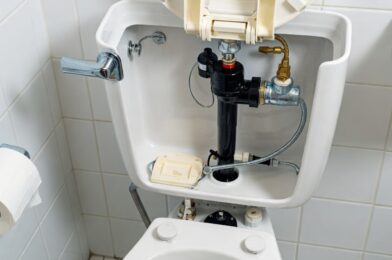
A running toilet wastes an astonishing amount of water up to 200 gallons a day in some cases. That’s not just an annoying sound, it’s money going directly down the drain every single month. The frustrating part is that a running toilet is almost always caused by one of two cheap parts that cost less than $10 to replace.
I fixed my first running toilet by watching a video online and going to the hardware store on my lunch break. The whole repair took about 20 minutes. Here’s how to do it yourself.
What You’ll Need
- Replacement flapper ($3-$5)
- Fill valve replacement kit ($10-$15, optional)
- Adjustable wrench
- Rubber gloves
- Paper towels or a sponge
Step by Step Instructions
Step 1: Diagnose the problem first
Remove the toilet tank lid and set it somewhere safe. Watch what happens when the toilet stops flushing. If water is trickling into the bowl from the tank, the flapper is the problem. If the water level is rising until it reaches the overflow tube, the fill valve needs adjustment or replacement. Most running toilets are a flapper issue.
Step 2: Turn off the water supply
The shut-off valve is on the wall behind the toilet. Turn it clockwise until it stops. Flush the toilet once to empty the tank so you can work without water everywhere.
Step 3: Replace the flapper
The flapper is the rubber seal at the bottom of the tank that opens when you flush and closes to let the tank refill. Unhook the old one from the ears on each side of the flush valve and disconnect the chain from the flush handle arm. Hook the new flapper on, reconnect the chain (leaving about half an inch of slack), and you’re done with the hard part.
Step 4: Adjust the float if needed
If the water level is too high and running into the overflow tube, the float needs lowering. On ball float systems (older toilets), gently bend the arm downward. On cup float systems (modern toilets), slide the float down the fill valve shaft. The water level should sit about an inch below the top of the overflow tube.
Step 5: Test the repair
Turn the water supply back on and let the tank fill. Flush once and watch carefully. The tank should fill to the correct level and stop. The sound of running water should be completely gone. If it’s still running, double check the flapper is seated correctly and the chain isn’t caught underneath it.
Pro Tips
Put a few drops of food coloring in the tank (not the bowl) and wait 15 minutes without flushing. If color appears in the bowl, your flapper is leaking even if you can’t hear it. This silent leak test can reveal slow leaks that waste water without making obvious noise.
When buying a replacement flapper, bring the old one to the hardware store or take a photo. Flappers are not all the same size and buying the wrong one will just create a new leak.
Final Thoughts
A running toilet is one of those problems that people live with for months or even years because they assume it requires a plumber. It almost never does. A $4 flapper and 20 minutes of your time is usually all it takes to solve it completely.