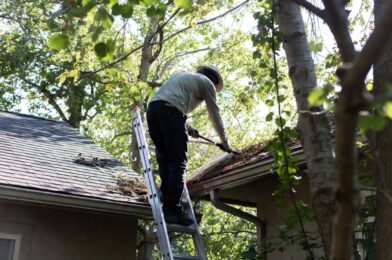
Clogged gutters are one of the most overlooked causes of serious home damage. When gutters can’t drain water away from the house, it backs up and overflows soaking the foundation, rotting the fascia boards, causing basement flooding, and in winter, creating ice dams that can lift shingles and leak into the attic.
Gutter cleaning isn’t the most pleasant job, but it takes about an hour for a typical single story home and costs nothing beyond your time. The key is doing it safely. Falls from ladders are one of the leading causes of home improvement injuries, and this guide addresses safety at every step.
What You’ll Need
- Extension ladder (rated for your weight + 50 lbs for tools)
- Ladder stabilizer (highly recommended attaches to ladder, rests against the house)
- Work gloves
- Plastic gutter scoop or small garden trowel
- Bucket with hook (to hang from ladder)
- Garden hose with spray nozzle
- Safety glasses
- Non-slip shoes
Step by Step Instructions :
Step 1: Set up the ladder correctly
Place the ladder on firm, level ground. Never lean a ladder directly against a gutter it can bend or crack under the weight. Use a ladder stabilizer that rests against the house above the gutter line. The base of the ladder should be positioned so that for every 4 feet of height, the base is 1 foot away from the wall.
Step 2: Scoop out debris by hand
Working from a section of clean gutter toward a downspout, scoop out leaves, dirt, and debris with your gloved hands or a plastic scoop and drop it into your bucket. Work toward the downspout so you’re always pushing debris toward the exit, not creating a new blockage further along.
Step 3: Check the downspouts
After clearing the gutter channel, check that each downspout is clear. Drop a small piece of debris in the top and watch to see if it exits at the bottom. If the downspout is blocked, flush it with a hose at full pressure from the top. Stubborn blockages can sometimes be cleared by feeding a plumber’s snake down from the top.
Step 4: Flush the gutters with a hose
With the debris removed, flush the gutters with a garden hose starting at the end farthest from the downspout. Water should flow freely toward and through the downspout. Watch for any areas where water pools these indicate a low spot in the gutter that needs to be re-pitched.
Step 5: Inspect for damage while you’re up there
While you have the ladder out, check the condition of the gutters. Look for cracks, holes, rust, separated joints, and loose fasteners (gutter spikes or screws). Small holes can be patched from inside with gutter sealant. Loose gutters that have pulled away from the fascia need new fasteners or replacement fascia if the wood has rotted.
Pro Tips
Clean gutters at least twice a year once in late spring after seeds and pollen stop falling, and once in late fall after the last leaves have dropped. If you have pine trees overhanging your roof, clean three or four times a year because pine needles accumulate quickly and are small enough to pack into downspouts.
Never lean out to the side to reach further. The temptation to stretch rather than move the ladder is how most ladder falls happen. Move the ladder every 3-4 feet as you work along the roofline.
Final Thoughts
Gutter cleaning is genuinely important preventive maintenance, not just a chore. A one hour investment twice a year protects your foundation, roof, and walls from water damage that can cost thousands of dollars to repair. Set up your ladder correctly, work methodically from one end to the other, and this becomes a straightforward and surprisingly satisfying job.