A squeaky floor is one of those small annoyances that somehow gets louder the later it is at night. Every step across the room sounds like an announcement. The squeak usually comes from a wood subfloor rubbing against a floor joist or from hardwood boards rubbing against each other both are fixable without replacing the floor.
The method you use depends on whether you can access the floor from below (through a basement or crawl space) or only from above. I’ll cover both approaches so you can use whichever applies to your home.
What You’ll Need
- Screws (1.5 to 2 inch wood screws)
- Drill
- Stud finder
- Carpenter’s chalk or pencil
- Baby powder or powdered graphite (for quick fixes)
- Squeak-Enz kit (optional, for carpeted floors)
- Helper to walk on the floor while you work from below
Step by Step Instructions :
Step 1: Locate the exact squeak
Walk slowly across the floor and mark the squeaky spots with a piece of tape or chalk. Have someone else walk while you watch from below (if possible) you can often see or hear exactly where the movement is happening. Squeaks almost always occur at a specific 6-12 inch section, not across the whole floor.
Step 2: Quick fix with powder (temporary)
For a fast temporary fix on hardwood floors, sprinkle baby powder or powdered graphite between the boards at the squeaky spot. Work it into the gaps with a soft brush and walk on it several times to push it deeper into the joint. This reduces friction and can eliminate squeaks for months, though it won’t last forever.
Step 3: Fix from below with a short screw
If you have basement access, this is the most effective repair. Have someone stand on the squeaky spot while you work below. Push up against the subfloor to feel movement, then drive a 1.5-inch screw up through the floor joist into the subfloor but not through the finished floor above. The screw pulls the subfloor tightly against the joist and eliminates the movement that causes the squeak.
Step 4: Fix from above through hardwood
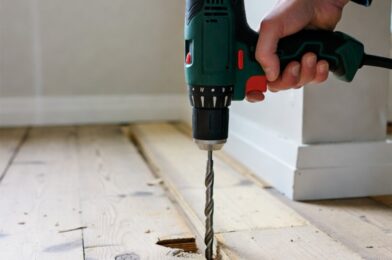
If you can’t access from below, drill a thin pilot hole through the hardwood at an angle into the subfloor or joist below. Drive a finish nail or screw down through the hole, then countersink it slightly below the surface. Fill the small hole with colored wood filler that matches your floor finish.
Step 5: Fix squeaky carpet from above
For carpeted floors, the Squeak-Enz kit is designed specifically for this. It guides a special screw through the carpet into the subfloor and joist below, then snaps the head off below carpet level so there’s no bump. This method works surprisingly well without damaging the carpet.
Pro Tips
If your floor has widespread squeaking across a large area, it may indicate that the subfloor was not properly glued to the joists during installation, or that the house has settled and created gaps. This is normal in older homes.
In very dry climates or during winter when indoor heating dries out the air, wood floors can squeak more because the boards contract slightly. A whole house humidifier can reduce seasonal squeaking significantly.
Final Thoughts
Squeaky floors rarely require professional repair. Most are caused by simple friction between wood surfaces, and the fix is usually a screw or some lubricating powder applied in the right place. Identify exactly where the squeak is, choose the right method for your access situation, and the noise will be gone permanently.