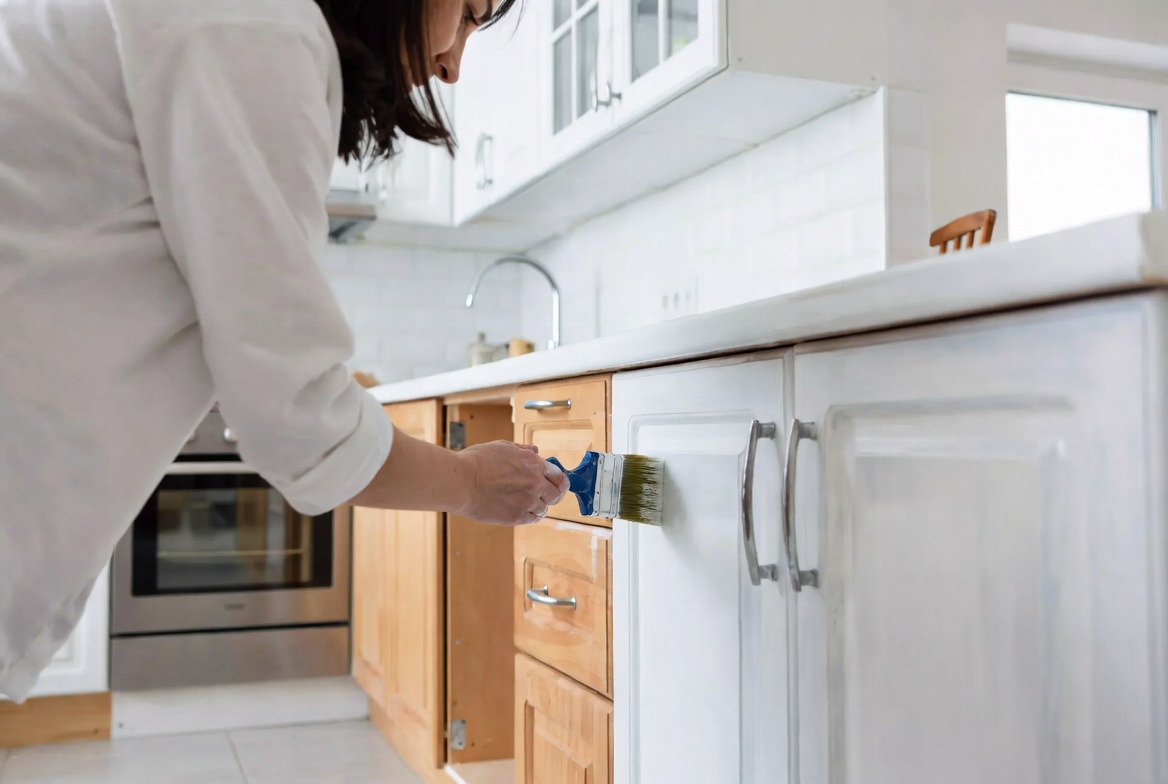
Painting kitchen cabinets is one of the highest impact transformations you can make to a home and one of the most budget-friendly. A professional kitchen cabinet painting job costs $1,500 to $4,000. Doing it yourself costs $50 to $150 in materials and a weekend of focused work.
The results can be genuinely stunning if you follow the right process. The keyword is preparation. Cabinets that look painted with a brush after a DIY job almost always suffered from skipped prep steps. Do the prep right and your cabinets will look factory sprayed.
What You’ll Need
- Cabinet-specific primer (Zinsser BIN or similar)
- Cabinet paint semi gloss or satin finish (Benjamin Moore Advance or similar water based alkyd)
- Small foam roller (4 inch)
- Angled brush for detail areas
- Liquid deglosser or TSP cleaner
- Sandpaper (120 and 220 grit)
- Screwdriver to remove doors and hardware
- Painter’s tape
- Drop cloths
- Small containers for paint (easier than working from the can)
Step by Step Instructions:
Step 1: Remove all doors, drawers, and hardware
Take every door off its hinges and remove all drawers. Label the back of each door and drawer with a number so you know exactly where each one goes back. Remove all knobs, pulls, and hinges. Work on doors and drawer fronts horizontally on sawhorses or a flat surface painting them flat eliminates runs and drips completely.
Step 2: Clean everything thoroughly
Kitchen cabinets accumulate years of grease, cooking oils, and grime that will prevent paint from bonding. Wipe every surface with a liquid deglosser or a strong TSP (trisodium phosphate) solution. This step is non negotiable paint applied over grease will peel within months regardless of how many coats you apply.
Step 3: Sand lightly for adhesion
Lightly sand all surfaces with 120 grit sandpaper to scuff the existing finish. You are not trying to remove the old finish entirely just roughing it up so the primer has something to grip. Wipe away all sanding dust with a tack cloth or damp rag and allow to dry completely.
Step 4: Apply primer and sand again
Apply a thin, even coat of cabinet specific primer to all surfaces. Let it dry fully according to manufacturer directions. Then sand lightly with 220 grit sandpaper this removes any raised grain or brush marks from the primer and creates an incredibly smooth surface for the topcoat. Wipe clean with a tack cloth.
Step 5: Apply paint with a foam roller and brush
Use the foam roller for flat panel areas it leaves almost no texture compared to a standard roller. Use the angled brush for edges, grooves, and recessed areas. Apply thin coats and resist the urge to overwork the paint. Cabinet paint levels itself as it dries, filling in brush strokes. Let each coat dry fully before applying the next. Two or three thin coats produce a far better result than one heavy coat.
Step 6: Reassemble after full cure
Cabinet paint takes 24 hours to dry but 2 to 4 weeks to fully cure and harden. Reattach doors and drawers after 24 to 48 hours but treat them gently for the first month. Slamming uncured cabinet doors can cause the paint to stick, crack, or mark. Install new hardware for a complete transformation.
Pro Tips
The brand of paint matters significantly for cabinets. Standard wall paint is too soft and will chip quickly on cabinet surfaces that are touched hundreds of times a day. Use a paint specifically formulated for cabinets and trim Benjamin Moore Advance, Sherwin Williams Emerald Urethane, and Rust Oleum Cabinet Transformations are all well regarded options.
If your cabinets have a shiny factory finish, the liquid deglosser is even more important than sanding. It chemically dulls the surface so the primer can bond properly.
Final Thoughts
Painting your kitchen cabinets is genuinely transformative. Old oak cabinets from the 1990s can look completely modern after a coat of white or gray paint. The project requires patience and careful preparation but no special skills. Budget a full weekend, follow the process, and you will end up with a kitchen that looks thousands of dollars more expensive than it actually cost.