Chemical drain cleaners work sometimes. But they’re harsh, they can damage older pipes over time, and the fumes are genuinely unpleasant. There’s also something wasteful about pouring a $10 bottle of chemicals down a drain when the same problem can be solved with things already in your kitchen.
I switched to chemical free methods a few years ago after a plumber told me that liquid drain cleaners were slowly eating away at the older pipes in my house. Since then, I’ve cleared probably a dozen clogs using only natural methods. Here’s what actually works.
What You’ll Need
- Baking soda (half a cup)
- White vinegar (half a cup)
- Boiling water
- A drain snake or zip-it tool ($3-$5 at hardware stores)
- Rubber gloves
- A cup plunger (the flat-bottomed type, not the flanged toilet plunger)
Step by Step Instructions :
Step 1: Start with boiling water
Before anything else, pour a full kettle of boiling water slowly down the drain. Do it in two or three stages, letting the hot water work for a few seconds between each pour. This alone clears a surprising number of simple clogs caused by grease or soap buildup.
Step 2: Try the baking soda and vinegar method
Pour half a cup of baking soda directly into the drain, followed immediately by half a cup of white vinegar. You’ll hear and see it fizzing that’s the chemical reaction breaking down the clog. Cover the drain with a plug or cloth to push the reaction downward rather than upward. Wait 15-20 minutes, then flush with hot water.
Step 3: Use the zip it tool for hair clogs
If the clog is in a bathroom sink or shower, it’s almost certainly hair. A zip-it tool is a long plastic strip with small barbs on the side. Push it into the drain, twist it slowly, and pull it back out. What comes out will not be pretty, but the drain will flow freely again. This is the most effective method for bathroom drains.
Step 4: Plunge if needed
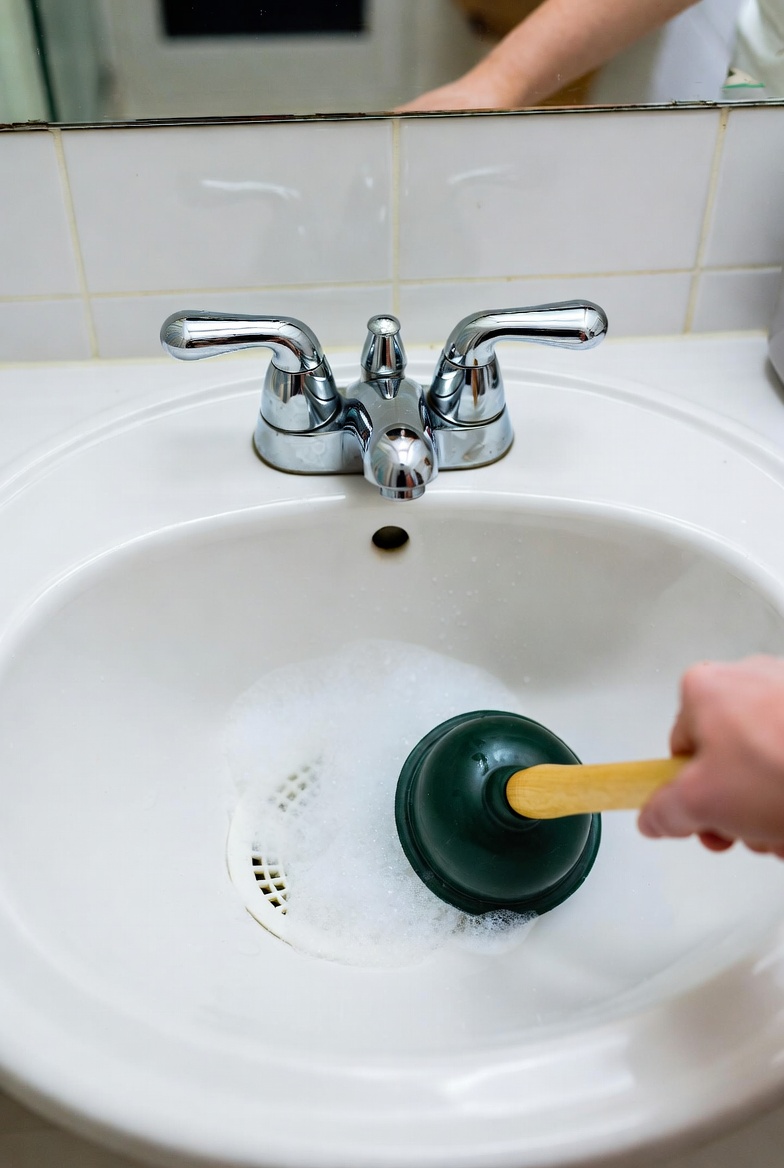
Fill the sink with a few inches of water first, then place the plunger over the drain and pump it firmly 10–15 times. The pressure and suction can dislodge blockages further down the pipe that the other methods couldn’t reach.
Step 5: Check the P-trap for stubborn clogs
The P-trap is the curved pipe section directly under your sink. Clogs that resist everything else are often sitting right there. Place a bucket underneath, unscrew the P-trap by hand (most are hand-tight), empty it out, clean it, and screw it back on. This fixes about 95% of truly stubborn kitchen and bathroom clogs.
Pro Tips
Prevention is easier than clearing. Pour boiling water down your kitchen drain once a week to dissolve grease before it builds up. In bathroom drains, use a simple $2 drain hair catcher it takes two seconds to clean and prevents most bathroom clogs entirely.
Avoid putting coffee grounds, cooking grease, or pasta down the kitchen drain. These are the three biggest causes of kitchen clogs.
Final Thoughts
Chemical-free drain clearing is better for your pipes, better for the environment, and cheaper than store-bought products. Keep a zip-it tool under the bathroom sink and a box of baking soda in the kitchen and you’ll handle 90% of clogs without spending more than a few dollars.
Frequently Asked Questions?
Can baking soda and vinegar damage pipes?
No, it’s safe for most household pipes.
How often should I clean my drain naturally?
Once a week is enough for prevention.
What if the clog doesn’t go away?
You may need to check the P-trap or call a plumber.