A door that sticks, drags, or won’t latch properly is one of those daily frustrations that most people just put up with rather than fixing. The truth is that most door problems have simple causes and simple solutions. The fix depends on why the door is misbehaving, and diagnosing the cause correctly is half the job.
Doors go wrong for a few main reasons: humidity causing the wood to swell, hinges that have come loose, the house settling and shifting the door frame slightly, or a strike plate that’s no longer aligned with the latch. Here’s how to identify and fix each one.
What You’ll Need
- Screwdrivers (Phillips and flathead)
- Longer screws (3-inch wood screws for hinge repair)
- Sandpaper (medium and fine grit)
- Wood plane or power sander (for serious sticking)
- Strike plate chisel kit (optional)
- Pencil
- Candle or chalk
Step by Step Instructions :
Step 1: Find exactly where it’s sticking
Rub a candle or a piece of chalk around the edges of the door. Close the door and open it again the chalk or wax will transfer to wherever the door is touching the frame, showing you precisely where the problem is.
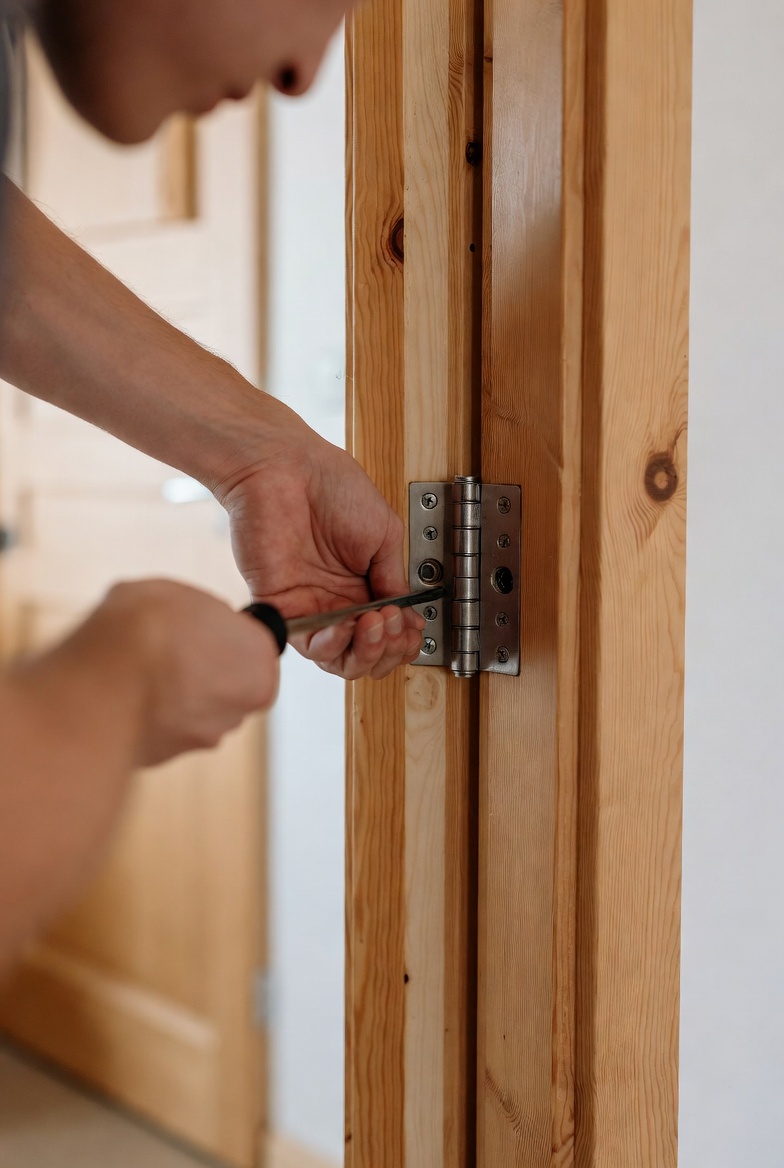
Step 2: Tighten loose hinge screws first
This is the most overlooked fix, and it solves a lot of door problems. Open the door and check every hinge screw. If any turn without tightening, the screw hole is stripped. Remove the screw, pack the hole with wooden toothpicks dipped in wood glue, let it dry for an hour, then reinsert the original screw or a longer one. This often completely solves the problem.
Step 3: Adjust or shim the hinges
If the door latch side is dragging on the floor or the top corner is hitting the frame, a hinge may be set too deep or not deep enough. Loosen the hinge screws, slide a piece of cardboard behind the hinge as a shim, and retighten. This moves the door very slightly and can correct small alignment issues.
Step 4: Sand or plane the sticking edge
If the door swells in summer and humidity is the cause, you need to remove a small amount of material from the sticking edge. For minor sticking, medium grit sandpaper works well. For significant swelling, use a hand plane or belt sander. Paint the raw wood edge immediately after unprotected wood will absorb moisture and swell again quickly.
Step 5: Adjust the strike plate
If the door closes but the latch doesn’t catch, the strike plate (the metal plate on the door frame) is misaligned. You can see where the latch is hitting by rubbing lipstick or chalk on the latch, then closing the door to mark the strike plate. File the strike plate opening slightly in the direction needed, or remove it completely and reinstall it in the correct position.
Pro Tips
During periods of high humidity (summer), wood doors naturally swell. Before sanding or planing, wait to see if the problem resolves itself as the weather cools and the wood dries out. Many seasonal sticking problems disappear on their own in fall.
If the door frame itself is visibly out of square, the house may have settled significantly. This is worth having a contractor assess, as it can indicate a structural issue.
Final Thoughts
Most door problems are solved in under an hour with a screwdriver and some sandpaper. The key is diagnosing the cause first rather than immediately sanding or planing removing wood is irreversible, so rule out the simpler fixes like loose hinges before you start modifying the door itself.