Holes in drywall happen to everyone. A doorknob swings too hard, a picture hook pulls out wrong, or someone moves furniture carelessly. Whatever caused the hole in your wall, the good news is that drywall repair is one of the most beginner-friendly home repairs you can do.
I patched my first hole after my kids decided to see what happened when they threw a toy car at full speed. It was about the size of a golf ball and looked awful. After one trip to the hardware store and a couple of hours, you couldn’t tell it was ever there. Here’s exactly how I did it.
What You’ll Need
- Spackle or joint compound (for small holes)
- Drywall patch kit (for holes bigger than 1 inch)
- Putty knife or drywall knife
- Sandpaper (120 and 220 grit)
- Primer and matching wall paint
- Damp cloth
Step-by-Step Instructions
Step 1: Assess the hole size
Small holes (nail holes, small dents up to half an inch) just need spackle. Medium holes (half an inch to 4 inches) need a mesh patch. Large holes (bigger than 4 inches) need a backing board and a cut piece of new drywall. Know what you’re dealing with before you start.
Step 2: Clean the edges
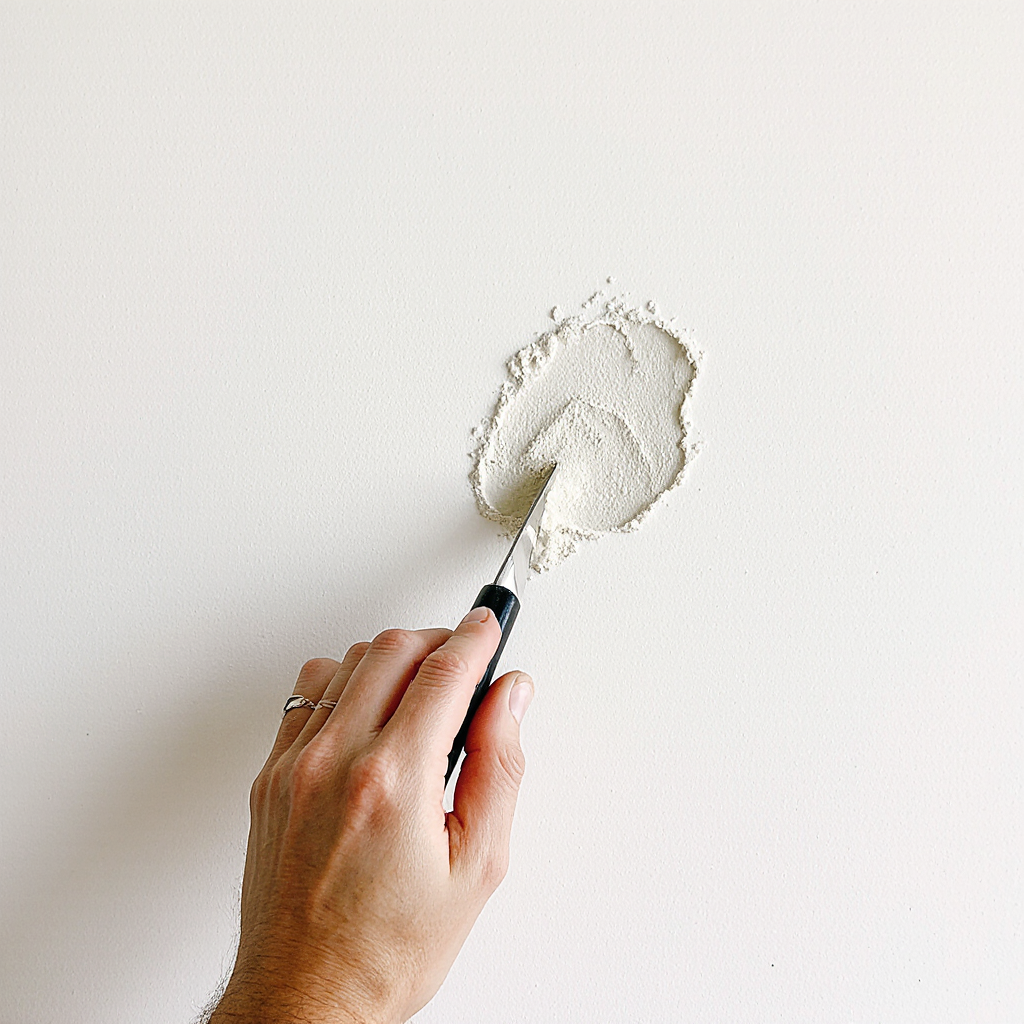
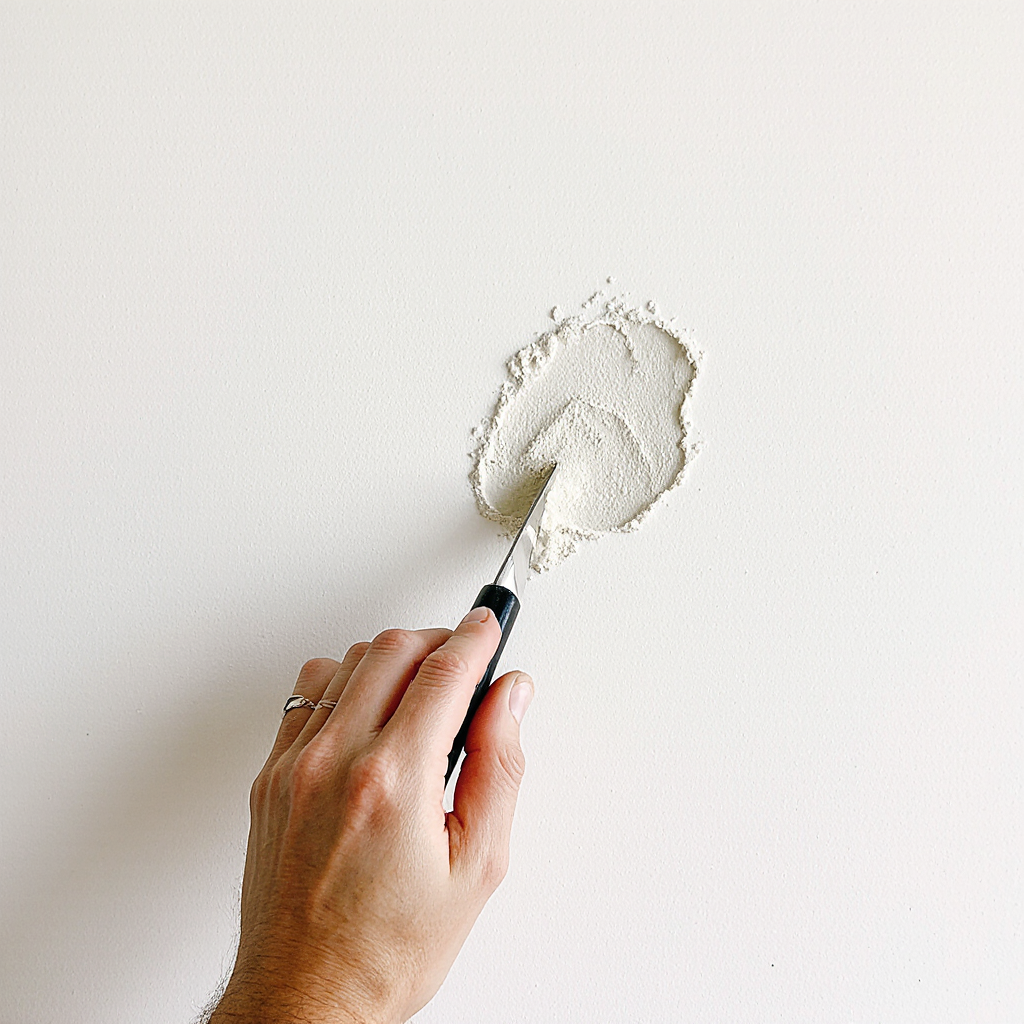
Use your knife to remove any loose paper or crumbling drywall around the edges of the hole. You want a clean, solid edge for the patch to grip onto. Wipe the area with a damp cloth and let it dry.
Step 3: Apply your patch or spackle
For small holes, press spackle in with your putty knife, smooth it flat, and let it dry. For medium holes, stick the self-adhesive mesh patch over the hole, then apply joint compound over it in a thin, smooth layer that extends a few inches beyond the patch on all sides.
Step 4: Sand it smooth
Once completely dry (usually 24 hours), sand the area with 120-grit sandpaper until it’s level with the surrounding wall. Then go over it again with 220-grit for a smooth finish. Run your hand across it — if you can’t feel the edge, you’re ready.
Step 5: Prime and paint
Apply a coat of primer first. This is a step many beginners skip, and it’s why patches sometimes look different from the surrounding wall even after painting. Let the primer dry fully, then paint with your matching wall color. You may need two coats for a perfect match.
Pro Tips
For large holes, cut the damaged area into a clean square or rectangle shape. It’s much easier to cut a patch piece and fit it to a neat square than to a jagged random shape.
If you can’t find the exact paint color, take a chip of paint from an inconspicuous area (like behind a door) to a hardware store. They can match it almost perfectly with modern color-matching technology.
Drywall repair is genuinely one of the most satisfying DIY jobs. You go from an ugly hole to a smooth, invisible wall and the whole process costs under $15. Take your time on the sanding and priming steps and the result will look professionally done.