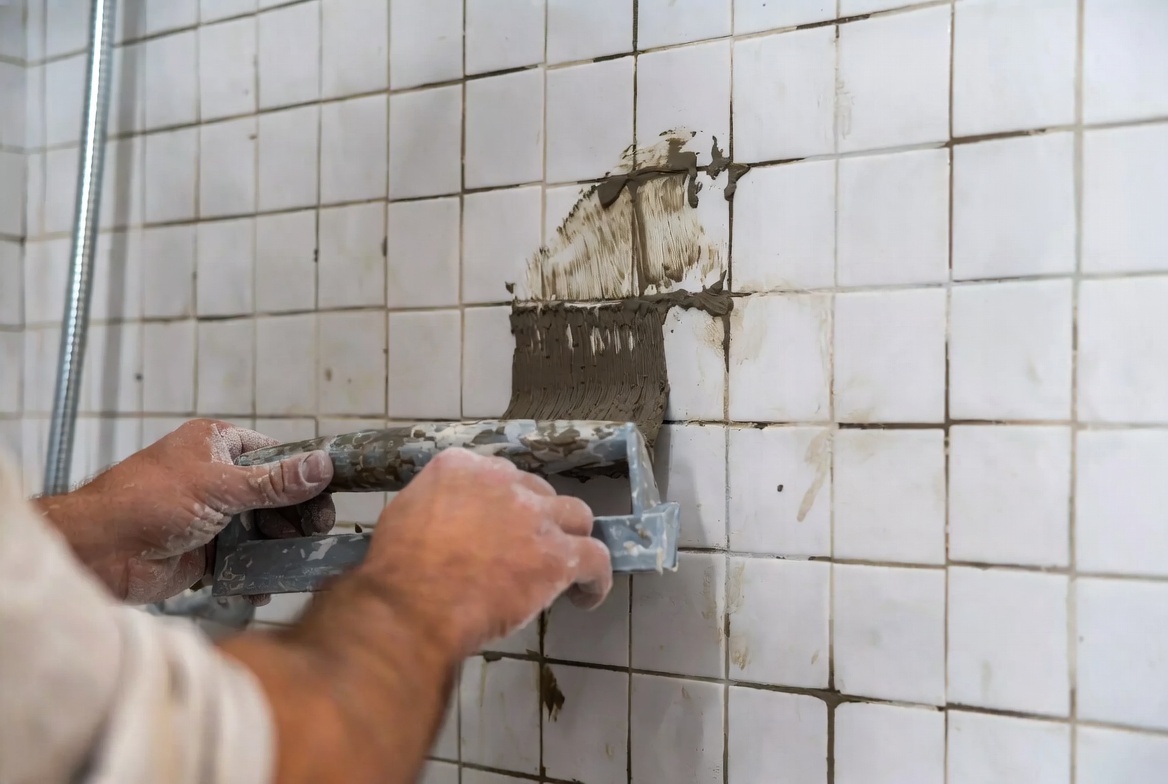
Grout doesn’t last forever. In a bathroom, it deals with daily moisture, cleaning chemicals, temperature changes, and the natural movement of the house all of which cause it to crack, stain, and eventually crumble. Once the grout deteriorates, water begins to penetrate behind the tiles, leading to mold, water damage, and eventually loose tiles.
The good news is that you don’t need to replace the tiles to fix bad grout. Re-grouting restores the bathroom to a fresh, clean appearance and re-establishes the waterproof barrier all for the cost of materials and a few hours of work.
What You’ll Need
- Grout saw or oscillating multi-tool with grout blade
- Vacuum (shop vac or regular with crevice tool)
- New grout (match the color or choose something fresh)
- Grout float (rubber float for spreading grout)
- Bucket and sponge
- Grout sealer
- Safety glasses and dust mask
- Painter’s tape
Step by Step Instructions:
Step 1: Remove the old grout
Use a grout saw (a small hand tool with a carbide blade) or an oscillating tool with a grout removal blade to cut out the old grout to a depth of about 3mm. Work carefully and slowly you want to remove grout, not chip the tiles. Vacuum out all the dust and loose debris from the joints before proceeding.
Step 2: Clean the joints thoroughly
Any grout residue, mold, or debris left in the joints will prevent new grout from bonding properly. Wipe the cleaned joints with a damp cloth and check for any mold treat with a bleach solution if found and let it dry completely. The joint surfaces need to be clean, dry, and free of any old grout residue.
Step 3: Mix the grout to the right consistency
Follow the manufacturer’s instructions on the package. Properly mixed grout should have the consistency of peanut butter thick enough to hold its shape on the float but smooth enough to press into the joints without tearing. Mix only as much as you can use in 30 minutes.
Step 4: Apply grout with a rubber float
Hold the float at a 45-degree angle and work the grout diagonally across the tile surface, pressing it firmly into the joints. Work in sections of about 4-6 square feet. Make sure every joint is completely filled with no gaps or low spots. The tiles will be covered in grout haze at this point that’s normal.
Step 5: Clean and finish
Wait 15-20 minutes after applying (the grout should have firmed up slightly but not hardened), then wipe the tile surfaces with a damp sponge using circular motions. Rinse the sponge frequently. This removes the grout haze from the tile faces while leaving the joints intact. After the grout fully cures (24-48 hours), apply grout sealer to protect it from moisture and staining.
Pro Tips
When removing old grout, work from the center of the joint outward. This reduces the risk of the tool slipping and chipping the tile edge.
Buy slightly more grout than you calculate you need. Leftover grout stores well in a sealed container and is invaluable for future repairs. Running out mid-project and buying a second bag can result in a slight color mismatch.
Final Thoughts
Re-grouting is a high-impact bathroom refresh that costs $20-$40 in materials and transforms the look of old tiles without the expense and disruption of a full bathroom renovation. The grout removal step is the most time consuming part, but done carefully, the rest of the project goes smoothly and the results last for years.