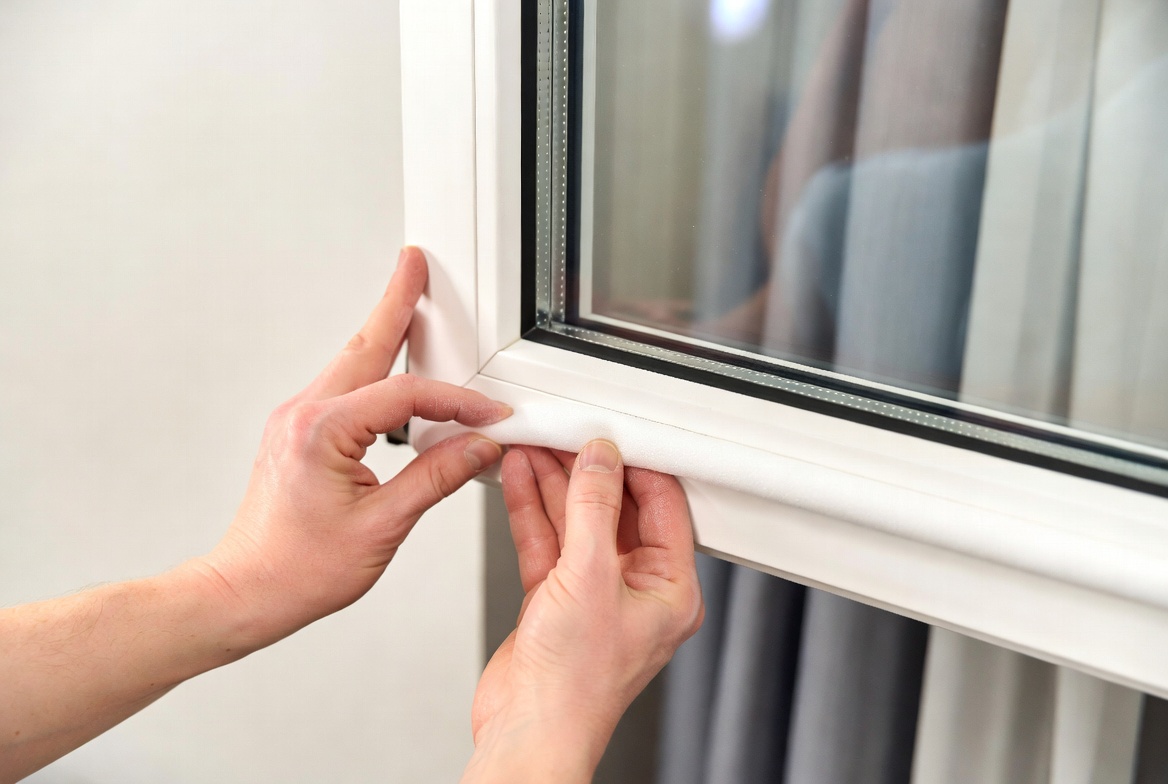
Drafts around windows and doors are silent money wasters. The U.S. Department of Energy estimates that air leaks account for 25-40% of heating and cooling costs in a typical home. The good news is that sealing these leaks is one of the most cost-effective home improvements possible materials cost $20-$50 and the energy savings can easily return that investment in a single winter month.
I sealed every window and door in my house three years ago on a windy afternoon. The difference was noticeable that same evening the rooms felt noticeably less cold near the windows and the heating system didn’t cycle as frequently.
What You’ll Need
- Foam weatherstripping (self-adhesive)
- V-strip (tension seal) weatherstripping
- Silicone or acrylic latex caulk
- Caulk gun
- Door sweep (for the bottom of exterior doors)
- Utility knife
- Putty knife (to remove old weatherstripping)
- Rubbing alcohol
Step-by-Step Instructions
Step 1: Find the leaks first
On a cold, windy day, hold your hand near the perimeter of every window and exterior door frame. You’ll feel air movement where gaps exist. For a more precise test, hold a stick of incense near suspected areas the smoke will drift toward or away from gaps. Mark everything you find with a small piece of painter’s tape.
Step 2: Remove old weatherstripping
Pull off any existing weatherstripping it’s often dried out, compressed flat, or partially falling off in older homes. Clean the surfaces where it was attached with rubbing alcohol to remove adhesive residue. New weatherstripping won’t bond well to dirty or adhesive covered surfaces.
Step 3: Apply foam weatherstripping to door frames
Self-adhesive foam weatherstripping is ideal for the top and side frames of exterior doors (the parts the door presses against when closed). Cut it to length, peel the backing, and press it firmly into the door stop (the small raised edge the door closes against). The foam compresses slightly when the door closes, creating an airtight seal.
Step 4: Use V-strip for sliding windows
For double-hung windows that slide up and down, V-strip weatherstripping is more durable than foam. Cut it to the height of the window channel and slide it into the channel with the open side of the V facing outward. When the window slides, the V-strip creates consistent tension and seals the gap along the full length of the channel.
Step 5: Caulk around the window frame
The joint between the window frame and the exterior wall is often where significant air infiltration occurs. Apply a bead of silicone caulk (exterior grade) around the entire window perimeter where the frame meets the wall. Smooth it with a wet finger immediately after application. Interior gaps between the frame and the wall can be sealed with expanding foam spray for larger gaps.
Pro Tips
Install a door sweep on the bottom of all exterior doors. This rubber or brush strip seals the gap between the door bottom and the threshold often the biggest single source of cold air infiltration in a home.
Check weatherstripping every two years. Foam compresses permanently over time and needs to be replaced. V-strip and door sweeps last longer but should be inspected annually.
Final Thoughts
Sealing drafts around windows and doors is the highest return-on-investment home improvement most homeowners can make. A $30 investment in weatherstripping and caulk, applied carefully on a weekend afternoon, can meaningfully reduce energy bills every single month for years. Start on the windiest day you can find it makes the drafts easy to locate.